
Looking at the developments of recent weeks, the increase in military tensions, the statements of political and military officials, and reports published by international media, concern has once again grown that the Middle East may be on the verge of entering a new and dangerous phase of military confrontation. As mutual threats and military preparations continue, efforts are also underway to preserve channels of negotiation and prevent further escalation of the conflict. This contradiction shows that the region remains caught between two different paths: military escalation and the difficult path of diplomacy.
The issue is not simply whether a new round of conflict will begin or not. The more important question is what the consequences would be for Iran, Israel, the United States, the countries of the region, and even global security and the world economy if such a path were chosen again.
The Victims of War Are Usually Not Present in the Decision-Making Rooms
In wars, it is usually those who are not on the battlefield who make the decisions, while those who had no role in making those decisions pay the highest price.
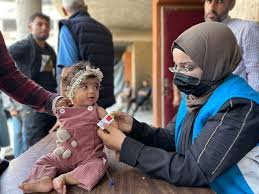
Ordinary people, women, men, children, and the elderly are the ones who lose their homes, their lives, their security, their jobs, and their future.
War is not only bombs and missiles. War means fear, displacement, death, the destruction of infrastructure, rising food prices, shortages of medicine, the loss of employment opportunities, and years of insecurity and social damage.
For this reason, opposing war does not mean ignoring security threats. Opposing war means accepting the reality that war should be the last resort, not the first choice.
The People of Iran Are Already Under Pressure Before Any War
For years, the people of Iran have been living with severe economic and social problems. Inflation, rising food prices, rent, medical and medication costs, and declining purchasing power have made life difficult for millions of Iranians.
For many families, the issue is no longer simply a decline in their standard of living. It is about meeting the most basic necessities of life.
People have reached the breaking point.
Under such circumstances, a large-scale war could multiply the existing economic pressure. Rising energy prices, disruption of trade, a decline in the value of the currency, business closures, and greater difficulty accessing food and medicine would affect ordinary people first and foremost.
People who are already paying a heavy price for the domestic and foreign policies of the Iranian government should not also become victims of a new war.
The People of Iran Between External Pressure and Internal Repression
One of the most painful realities is that, in recent years, the people of Iran have faced two pressures at the same time: pressure from the government at home and external pressure from abroad.
The Islamic Republic has repeatedly suppressed public protests with violence. From previous protests to the nationwide protests of Dey 1404 and January 2026, various reports have indicated that thousands of people were killed, tens of thousands were injured, and large numbers were arrested.
This repression has not been limited to the streets. Arrest, torture, imprisonment, and execution have also been among the tools used by the government against opponents and protesters.
Even today, the execution of individuals who were arrested in connection with the protests shows that the repression has not ended. On October 5, 2026, for example, Iranian authorities executed two men who had been arrested in connection with the January 2026 protests.
But there is one very important point:
Opposing war does not mean supporting the Islamic Republic.
Just as:
Opposing the Islamic Republic does not mean supporting a military attack on Iran.
A nation is not the same as its government.
The people of Iran are not responsible for the decisions of the Islamic Republic, just as the people of Israel are not responsible for every decision of the Israeli government, and the people of the United States are not responsible for every decision of the United States government.
Human life does not depend on a flag or a government.
Minab: A Painful Picture of the Human Cost of War
Perhaps nothing can demonstrate the human cost of war better than the fate of children.
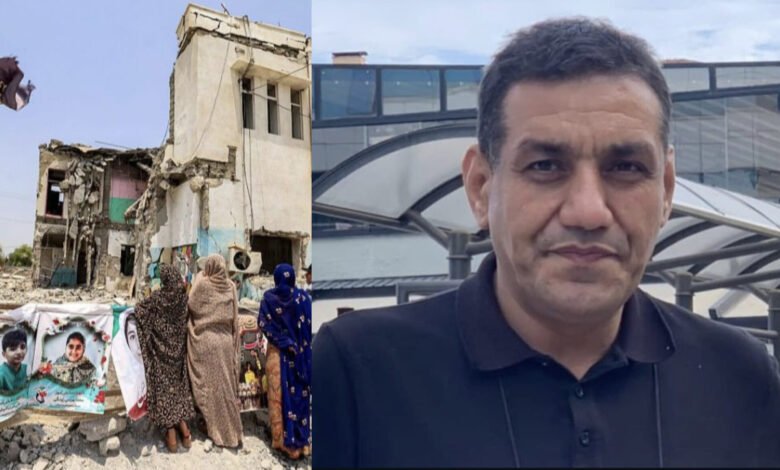
In an attack on the Shajareh Tayyebeh girls’ elementary school in Minab, southern Iran, on February 28, 2026, UNICEF reported that 168 girls were killed while classes were in session. Most of those killed were schoolchildren between seven and twelve years old. UNICEF also reported that approximately 180 children had been killed in the broader military escalation in Iran at that time.
This is not just a number.
One hundred and sixty-eight children means 168 families, 168 futures, 168 dreams, and hundreds of people whose lives were changed forever.
A school should be a place of education and safety for children, not a place where they die.
This tragedy reminds us that once a war begins, it is no longer possible to easily determine who will become a victim and who will not. War has a logic of its own, and once it begins, it can spread far beyond its initial objective.
Should People Be Forced to Choose Between War and Dictatorship?
One of the most dangerous political mistakes is to force people to choose between two bad options.
As if someone who opposes the Islamic Republic must therefore support a military attack.
Or if someone opposes a military attack, they must therefore be a supporter of the Islamic Republic.
This logic is wrong.
The people of Iran have the right to oppose both dictatorship and war.
They have the right to demand freedom, democracy, human rights, and security without being forced to accept the destruction of their country and the loss of human lives in order to achieve these goals.
The people of Israel also have the right to security, and the people of the United States have the right to be concerned about attacks against their citizens and forces.
The security of one side should not mean making the lives of millions of other people unsafe.
War Does Not Affect Only Iran’s Borders
A large-scale war involving Iran, Israel, and the United States cannot remain merely a limited regional conflict.
The Middle East is directly connected to global energy, trade, and security.
Any serious disruption to energy routes, particularly the Strait of Hormuz, could increase oil and energy prices, and its effects could quickly spread to the economies of other countries.
Rising fuel and commodity prices, disruptions to supply chains, increasing inflation, and worsening regional insecurity are only some of the consequences that could be felt beyond the region’s borders.
Therefore, in today’s world, a war between several countries is not merely a matter for those countries themselves.
The world is already facing enough economic crises, migration, insecurity, and instability. Adding another major war to this situation is not a decision whose consequences can easily be predicted.
The Experience of War Should Have Taught Politicians Something
History has repeatedly shown that a war may begin with a specific objective, but its outcome does not necessarily follow what those who started it intended.
Sometimes an attack is carried out to prevent war, only to become the beginning of a larger war itself.
Sometimes the goal is to change the behavior of a government, but the result is greater hatred, destruction, and instability.
And sometimes those who believe that a war will be short and controllable are confronted with a crisis that no one can easily stop.
In international relations, power is not limited to the ability to attack. Real power also lies in the ability to prevent war, manage crises, negotiate, and find ways to reduce tensions.
Ordinary People Should Not Pay the Price for the Calculations of Powers
No government, no military power, and no political leader should forget that behind the statistics of war are real human beings.
A child who is frightened by the sound of explosions at night, a mother who does not know whether her child is alive, a father who has lost his home and job, and a family that cannot find medicine for a sick relative are all part of the reality of war.
These people are not present in political negotiations.
They are not present in command rooms.
But they pay the highest price.
If the purpose of politics is to preserve human security and life, we must ask ourselves whether the path we choose will truly lead to greater security, or whether it will simply create a new cycle of violence.
Reason Does Not Mean Ignoring the Dangers
Saying that war should not be the primary solution does not mean being naive or ignoring threats.
On the contrary, political rationality means taking threats seriously while, before using military force, exhausting every possible avenue to prevent war.
Negotiation, mediation, diplomatic pressure, security agreements, international monitoring, and establishing communication channels during times of crisis are tools that can prevent a political crisis from becoming a humanitarian catastrophe.
Even if negotiations are difficult, even if the other side cannot be trusted, and even if the disagreements are deep, negotiation can still be less costly than war.
Sometimes political rationality means negotiating with someone we do not like, simply to prevent innocent people from being killed.
The World Must Raise the Voice of Reason Even Louder
Today, the issue is not only Iran, Israel, or the United States.
The question is whether the international community can find a way to reduce tensions before witnessing another major humanitarian catastrophe.
No one should ask the people of Iran to choose between the Islamic Republic and war.
No one should ask the people of Israel to abandon the right of others to live in order to achieve their own security.
And no one should imagine that a major war in the Middle East will end without a cost to the world.
The people of Iran need freedom, not war.
The people of Israel need security, not a life of fear.
The people of the region need stability, not the expansion of violence.
And the world needs reason, not decisions that may sacrifice millions of people to political and military calculations.
The sound of war is being heard again.
This time, the world must raise the voice of reason even louder.